Home › Industrial and Heavy-Duty Asphalt Paving
Precision Asphalt Nashville delivers industrial and heavy duty asphalt paving for facilities across Nashville, TN. We design pavements with thicker sections, strong bases, and proper reinforcement to handle trucks, forklifts, and constant loading. Our team paves distribution centers, loading docks, truck yards, and warehouse aprons.
Precision Asphalt Nashville provides professional industrial asphalt paving throughout Nashville, TN, Tennessee and the surrounding area. Our licensed, insured crew delivers safe, clean, on-time work with a free estimate before anything begins. Call (615) 686-2795 or request your free quote.
Industrial Asphalt Paving Built for Heavy Use in Nashville
Industrial and heavy-duty asphalt paving is different from a retail parking lot or a neighborhood driveway. At Precision Asphalt Nashville, we design pavements to survive constant truck traffic, loading equipment, fuel spills, and Tennessee heat without rutting or breaking up every few years.
Typical industrial projects we handle in the Nashville area include distribution centers, manufacturing plants, trucking yards, warehouse complexes, container storage areas, and utility or municipal service yards. These sites see a lot of heavy axle loads, tight turning, and slow grinding traffic that will quickly destroy a standard paving section.
Our approach starts with how the site is actually used. We map out truck routes, turning areas, loading docks, dumpster pads, staging zones, and any spot where lift trucks or cranes sit for long periods. The asphalt structure under those areas is not the same as what we use for employee parking. We increase stone base depth, use higher performance industrial asphalt mixes, and in some cases specify reinforced concrete in very small, high stress locations like dumpster pads, all tied into the surrounding asphalt correctly so you do not get a joint that fails.
Nashville’s climate is a factor too. We see wide temperature swings, hard summer sun, and frequent rain. Industrial asphalt here needs enough thickness and stiffness to hold shape in 95 degree heat, and drainage must be right so water does not sit and soften the base. When we design heavy-duty pavement, we use local soil conditions and traffic loading, not a generic chart from another state.
How We Design Heavy-Duty Asphalt for Your Site
A successful industrial asphalt paving project in Nashville starts before the first truck of stone shows up. Precision Asphalt Nashville follows a step-by-step design process so the pavement section matches your actual loads and budget.
1) Site evaluation and coring when needed. We walk the property, check grades, look for soft areas or pumping when trucks drive through, and identify drainage problems. For existing pavement, we can take cores to see current asphalt thickness, base condition, and whether there is fabric or old concrete under the surface.
2) Soil and base assessment. Many Nashville sites have a mix of clay and rock. Clay holds water and loses strength when saturated, so we test the subgrade with proof-rolling. If we see deflection or pumping, we plan undercutting, stabilization with crushed stone, or in severe cases geotextile or chemically treated subgrade. This step often prevents future rutting and alligator cracking in truck lanes.
3) Pavement section design. For light car parking, 2 to 3 inches of asphalt over 6 inches of base might work. For heavy truck routes or loading yards, we often recommend 3 to 4 inches of binder course plus 1.5 to 2 inches of heavy-duty surface mix over 8 to 12 inches of compacted stone base. High volume facilities like distribution centers with frequent 18 wheelers may need even more base depth in main drive lanes.
4) Mix selection and performance grade. Industrial asphalt uses stronger aggregates and higher quality binders than typical parking lots. We specify mixes designed for heavy loads and high temperatures, often with a higher performance grade binder that resists softening and shoving in summer. Where forklifts, pallet jacks, or steel tracked equipment are common, we adjust the surface mix to reduce raveling and surface tearing.
5) Phasing and access plan. Industrial sites rarely shut down completely. We work with your operations team to phase work so shipping and receiving can continue, keeping key truck docks open or scheduling critical closures during off hours or weekends.
What the Construction Process Actually Looks Like
Once design is set, the quality of your industrial asphalt paving in Nashville comes down to execution. Precision Asphalt Nashville follows a predictable sequence so you know what to expect and operations can stay as smooth as possible.
Clearing and demolition: We remove old asphalt, failed base materials, and any buried concrete that will cause reflective cracking. On many Nashville industrial sites we find thin overlays on top of broken concrete. We either remove the unstable layers or mill deep enough to create a uniform, bondable surface.
Subgrade preparation: We shape the subgrade to the planned elevations and ensure water will flow to inlets or swales, not sit in traffic lanes. Soft or pumping areas are undercut, then rebuilt with compacted stone and, when needed, fabric or grid. This is where we solve many future problems before asphalt is ever placed.
Base installation and compaction: Heavy-duty pavements depend on thick, well compacted base. We place graded aggregate base in lifts and compact with vibratory rollers to specified densities. For high load zones like truck scales and main drive aisles, we may run additional passes and perform proof-rolling under observation so soft spots are corrected immediately.
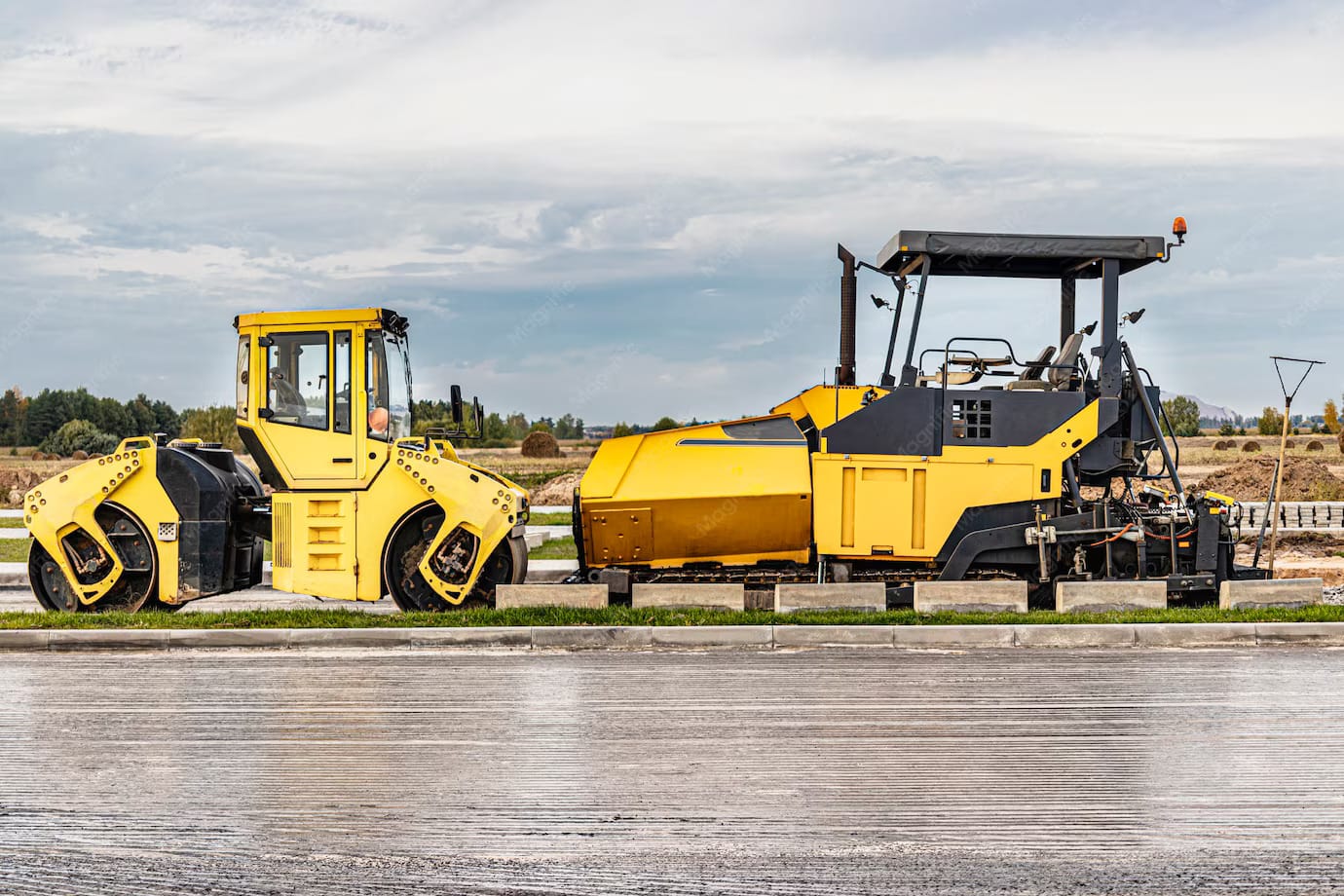
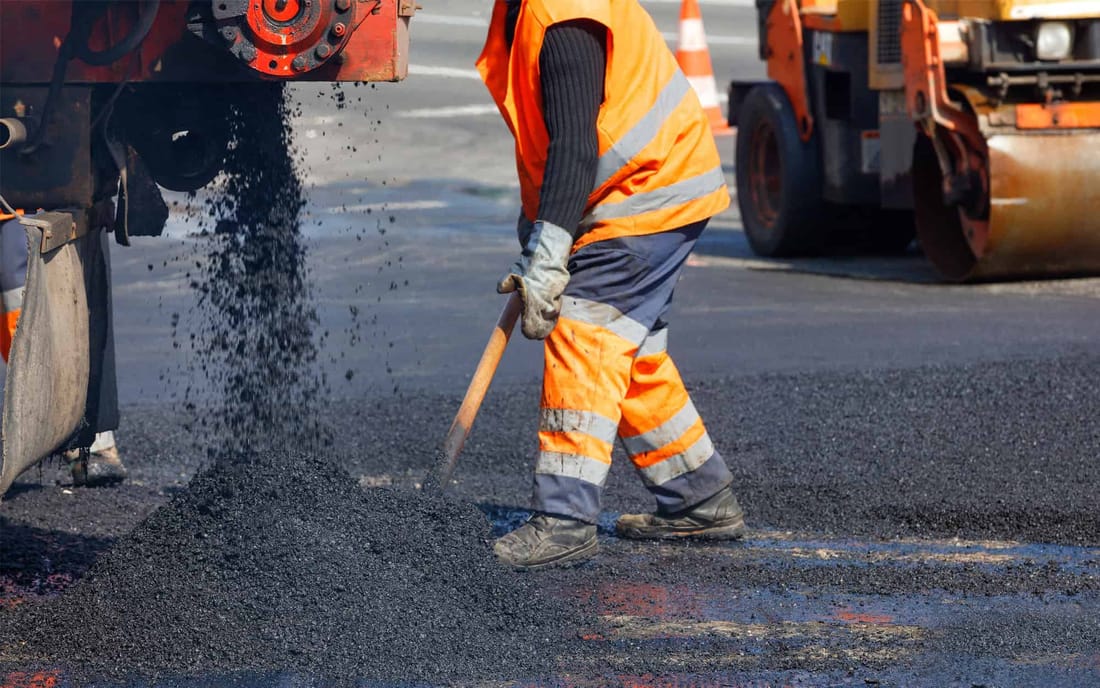
Binder and surface courses: Industrial sections usually get at least two asphalt layers. The lower binder course provides structural strength and ties the base together. The top surface course gives a tight, durable finish that stands up to traffic and weather. We use pavers equipped with automation for grade and slope control, followed by steel and pneumatic rollers that achieve proper compaction without over-rolling joints.
Joint construction and transitions: In industrial yards you often have transitions to dock slabs, warehouse floors, and concrete aprons. We pay close attention to these areas so forklift wheels do not hit sharp edges and so water does not pond at thresholds. We sawcut clean edges, create smooth transitions, and seal joints where needed to keep water out of the base.
Striping, signage, and safety: After curing, we add striping, truck route markings, trailer parking stalls, and safety markings like crosswalks or hatch zones. For facilities with frequent night operations, we can incorporate reflective markings and layout that reduce confusion and keep traffic moving safely.
Costs, Common Problems, and How to Avoid Rework
Industrial asphalt paving represents a major investment, and the price can vary widely. Precision Asphalt Nashville is straightforward about what drives cost so you can make good decisions instead of just taking the lowest line item bid.
Key cost drivers include: subgrade condition (soft, wet clay that needs undercut or stabilization costs more than firm ground), total pavement thickness, total square footage, access and phasing complexity, and drainage improvements. A site that allows full access and continuous paving is less expensive per square foot than a project that must be broken into many small phases to keep operations open.
Common problems we see in older Nashville industrial pavements are deep rutting in truck lanes, shoving at stop points, cracking over old concrete joints, and standing water next to docks. All of these issues usually trace back to one of three things: base that was too thin or poorly compacted, mixes that were not designed for the actual truck loads, or grades that did not move water off the pavement.
To prevent rutting and shoving, we match the asphalt structure to real traffic counts. If you are adding more trucks or heavier loads than the site was originally built for, we adjust the design accordingly. For reflective cracking over old concrete, we either remove or crack and seat the concrete and place a thick enough asphalt structure with proper reinforcement strategies, rather than simply putting on a thin overlay that will mirror every crack within a year or two.
Drainage is another major factor in both cost and long-term performance. If we see low spots or catch basins set too high, we include regrading, new inlets, or adjustments as part of the proposal. It adds some cost up front but saves resurfacing dollars later. Standing water not only weakens base materials, it also accelerates oxidation, which leads to raveling and potholes.
We also walk customers through life-cycle cost instead of just first cost. In some heavy-duty areas it makes more sense to spend a bit more on additional base and thicker asphalt now, then plan on sealcoating and minor patching, rather than saving a little on construction and facing major reconstruction in a few years.
What Nashville Industrial Owners Should Know Before Hiring
Choosing the right contractor for industrial asphalt paving in Nashville is as important as the design itself. Precision Asphalt Nashville encourages you to ask specific questions so you know you are dealing with a crew that understands heavy-duty work, not just driveways and small parking lots.
Ask for examples of local projects with similar use, such as trucking yards, manufacturing plants, or distribution centers they have paved within the last five years. Drive by during or after a rain and look for ponding, rutting, or patchwork that failed early. A good industrial job should still look even and drain cleanly years after installation.
Request proposed pavement sections in writing, with thicknesses for base, binder, and surface labeled separately for car parking, truck lanes, and high stress areas. Beware of one size fits all sections that use the same design everywhere. Industrial sites almost never have uniform loading, and the design should reflect that.
Make sure the contractor can explain how they will manage traffic and keep your operation running. For warehouses in Nashville, shutting down docks during business hours can be more costly than the paving itself. We build schedule and phasing around your shipping windows, shift changes, and peak seasons, and we coordinate with your safety team on temporary routing and signage.
Finally, discuss maintenance up front. A heavy-duty asphalt pavement still needs attention. We usually recommend a planned program that might include crack sealing in years 2 to 3, sealcoating on appropriate areas like car parking, and periodic inspection of high load zones. For customers who prefer predictable budgeting, Precision Asphalt Nashville can outline a multi-year maintenance plan with rough costs so you are not surprised later. When design, construction, and maintenance are all addressed together, industrial asphalt paving becomes a long-term asset instead of a recurring headache.