Home › Speed Bumps, Curbs, and Asphalt Accessories
Precision Asphalt Nashville installs speed bumps, asphalt curbs, and other accessories for parking lots and private roads in Nashville, TN. We help control traffic speed, direct vehicles, and protect landscaping. Our team installs asphalt and preformed products that integrate cleanly with your existing pavement.
Precision Asphalt Nashville provides professional speed bump installation throughout Nashville, TN, Tennessee and the surrounding area. Our licensed, insured crew delivers safe, clean, on-time work with a free estimate before anything begins. Call (615) 686-2795 or request your free quote.
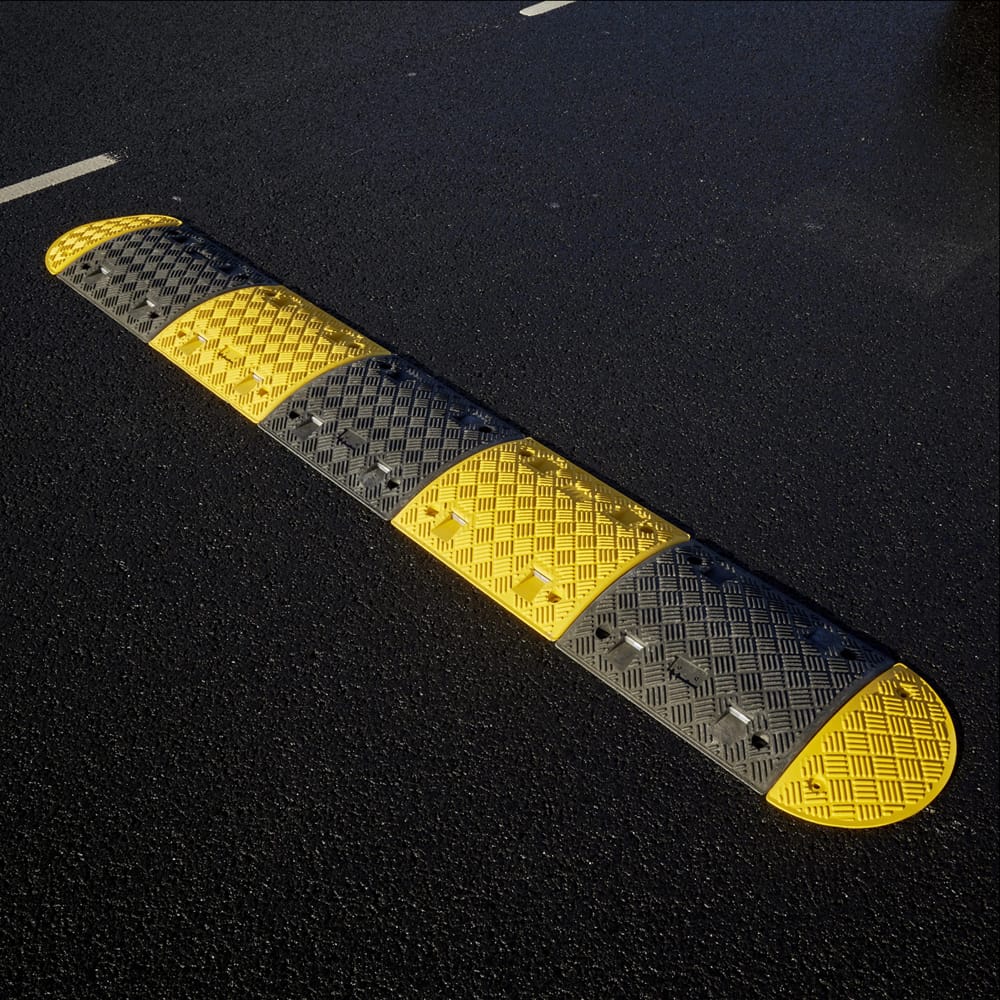
Practical Speed Bump Installation for Nashville Properties
Speed bumps look simple, but if they are not planned correctly they cause drainage issues, vehicle damage, and traffic problems. At Precision Asphalt Nashville, we start every speed bump installation by walking the site with you and looking at how people actually drive through your lot or private drive. We note entry and exit points, pedestrian routes, delivery truck paths, and any low spots where water already collects.
We measure lane width, turning radiuses, and existing slopes so the bump height and length are appropriate for your traffic mix. A residential townhome drive with sedans needs a different profile than a loading area that sees box trucks. We also check local fire access and service-vehicle needs so emergency vehicles can still get through without delay.
Before any work starts, we mark proposed bump locations with paint so you can see how they line up with parking spaces, crosswalks, and building entrances. For HOA boards and property managers, we can provide simple layout sketches and basic measurements so you can document the change for your residents or tenants.
How We Build Asphalt Speed Bumps That Last
Nashville’s freeze-thaw cycles in winter and intense summer heat are hard on speed bumps. If the base is weak or the asphalt is too thin, the bump will ravel, crack, or flatten within a couple of seasons. Precision Asphalt Nashville prepares each speed bump location like a small pavement project, not a quick patch.
We start by cutting and milling the existing asphalt where the bump will go so it ties in cleanly instead of just sitting on top. Soft or broken base is removed and replaced with compacted stone so the bump does not settle. Once the foundation is solid, we place hot-mix asphalt in lifts, shaping the bump with a defined height and smooth approaches that match your traffic needs.
Typical heights range from 2.5 to 3 inches for standard lots, with lengths adjusted based on prevailing speeds. For locations with frequent delivery trucks, we may extend the taper so suspensions are not damaged while still slowing traffic. Every bump is machine compacted and hand finished at the edges to prevent early cracking or separation from the existing pavement. After cooling, we apply high visibility markings and reflective striping so the bump is obvious during day and night, even in heavy rain.
Curbs, Wheel Stops, and Site Details That Control Traffic
Speed control is only part of a safe lot. Curbs, wheel stops, and other accessories keep vehicles where they belong and protect structures, landscaping, and pedestrians. At Precision Asphalt Nashville we install both cast-in-place concrete curbs and pre-cast wheel stops, depending on your site and budget.
Concrete curbs are formed and poured over a compacted base, with reinforcement where needed and proper expansion joints so they can handle Nashville’s seasonal movement. We set curbs to guide drainage toward inlets and away from entrances, which is important during the heavy spring and fall storms we see here. For existing lots that need quick changes with minimal disruption, we often recommend pre-cast wheel stops that are drilled and pinned into the asphalt.
We also install bollards around storefronts, corners, and loading docks, as well as metal and plastic sign posts for “Stop,” “Yield,” and “Speed Limit” signs. All these elements are laid out to match actual driving patterns, not just placed where they fit, so vehicles are naturally directed to safer speeds and paths without confusing drivers.
Material Options, Markings, and Visibility Upgrades
Most of our speed bump installations in Nashville use hot-mix asphalt, because it bonds well with existing pavement and handles plowing and sweeping better than many bolt-down systems. However, there are situations where modular rubber or plastic speed cushions are a better fit, for example private drives where future removal may be likely or where emergency vehicle clearance is a concern. Precision Asphalt Nashville walks you through those tradeoffs instead of pushing a single option.
Once the structure is in place, visibility matters as much as the bump itself. We apply high build traffic paint or thermoplastic striping in contrasting colors, usually yellow or white, along with arrows or “Slow” legends where needed. On dimly lit properties, we can add reflective markers or buttons to increase nighttime visibility, which is especially useful in apartment complexes and senior living communities.
Color choices, marking patterns, and sign placement are discussed with you in advance so they match your property’s look and any branding or HOA standards. For curbs, we can paint only critical edges such as fire lanes and drop-off zones, or do full runs of color in high risk areas where pedestrians are stepping off sidewalks into traffic.
Costs, Scheduling, and What Affects Your Price
Speed bump installation, curbs, and accessories vary in cost based on a few very specific factors: the number of bumps, their size and profile, existing pavement condition, material choices, and how much layout or drainage correction is needed. A single asphalt speed bump on a sound lot is relatively inexpensive. A series of bumps with new striping, curbs, and signage across a large shopping center will be a more involved project.
Before we price anything, Precision Asphalt Nashville inspects your pavement for cracking, rutting, and weak base. If the area is failing, we will recommend localized repairs before installing speed control features, otherwise your new bump will crack or sink with the old asphalt. We also look at access timing. Work at retail centers is usually scheduled very early in the morning or during off-peak hours, while multifamily properties may prefer mid-day when resident traffic is lower.
Season also plays a role. In Middle Tennessee, hot-mix asphalt work is most reliable from late March through early November, depending on temperatures. We can still perform some work in colder months, but we will be direct with you about what can be done without sacrificing quality. Clear pricing, with line items for bumps, curbs, wheel stops, striping, and signage, lets you prioritize what must be done now and what can wait for a later phase.
What Nashville Property Owners Should Decide Before Hiring
Owners and managers in Nashville can avoid wasted time and change orders by clarifying a few points before hiring a contractor. First, identify the specific problems you want solved: speeding near entrances, cut-through traffic on a private drive, pedestrians crossing in the wrong place, or vehicles striking buildings or landscaping. Precision Asphalt Nashville uses this list to recommend the right combination of bumps, curbs, wheel stops, and signage rather than just adding obstacles at random.
Second, confirm who will approve the layout. For HOAs and condos, that might be a board vote. For commercial properties, that might be an asset manager in another city. Getting that decision maker involved early prevents last-minute changes after paint lines are already down. Third, think about future maintenance. Any new asphalt features should be included in sealcoating and re-striping plans so markings stay visible and water is kept out of joints.
Finally, ask any contractor about base preparation, compaction methods, and marking materials, and how they handle Nashville weather if conditions change on the scheduled day. A proper answer will be specific, not vague. Our team explains exactly what we will do step by step, so you know your speed bump installation and asphalt accessories will hold up under local traffic and climate conditions.