Home › Private Road and Lane Paving
Precision Asphalt Nashville handles private road and lane paving for neighborhoods, farms, and estates throughout Nashville, TN. We design and build asphalt roads that manage drainage and stand up to daily traffic. From long shared driveways to rural access lanes, our team delivers a smooth, reliable surface with proper base and grading.
Precision Asphalt Nashville provides professional private road paving throughout Nashville, TN, Tennessee and the surrounding area. Our licensed, insured crew delivers safe, clean, on-time work with a free estimate before anything begins. Call (615) 686-2795 or request your free quote.
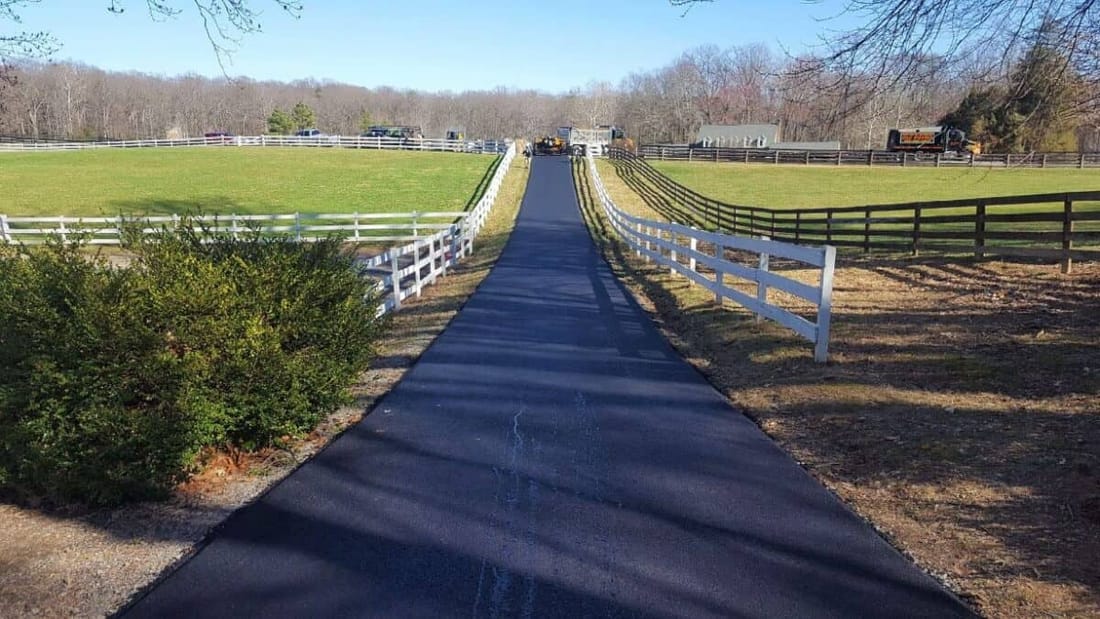
Private Road Paving for Nashville Properties
Private roads and lanes in Middle Tennessee take a beating from hot summers, sudden storms, and heavy pickup traffic. Precision Asphalt Nashville focuses on private road paving that fits how people here actually use their drive lanes, shared roads, and long rural entrances.
We build and repair private asphalt roads for small neighborhoods, farms, estate homes, churches, lake properties, and commercial sites around Nashville. Our crews work all over Davidson County and nearby areas, so we know where the red clay turns slick, where tree roots are likely to push up a lane, and how fast surface water moves on the hills around Old Hickory, Antioch, and Bellevue.
From the first visit, we look at how many vehicles use your road, what type of traffic it sees, and how emergency and delivery vehicles access the property. That local, on-site evaluation is what lets us design a private road that drains correctly, holds up under Tennessee weather, and stays smooth enough that your neighbors or customers are not calling you about potholes every season.
How We Evaluate Your Existing Lane or New Road
Every private road paving project starts with a site walk, not a guess from a satellite photo. A Precision Asphalt Nashville estimator meets you on the property, walks the full length of the lane or proposed route, and checks several specific items.
We probe the existing base or soil with a steel rod to see how firm it is and how deep the current stone layer runs. On Nashville hillsides, we pay close attention to soft subgrade spots and see if the area has any history of standing water or rutting after storms.
We measure slopes with a digital level so we can design drainage that keeps water off the road. If your lane crosses a low spot or ditch, we look at culvert sizing, whether the pipes are crushed or undersized, and if headwalls are needed to keep shoulders from washing out.
We also ask about how the road is used. For example, a shared private road serving several homes and weekly trash trucks needs thicker asphalt and a stronger stone base than a simple residential driveway. A farm lane driven by loaded hay trailers or horse trailers will have different turning stress at gates and barns. These details help us recommend the right pavement structure instead of a one size fits all approach.
Step by Step: Our Private Road Paving Process
Precision Asphalt Nashville follows a clear, field tested process for private road and lane paving so you know what will happen and when.
1. Layout and preparation: We mark the road edges, set string lines or paint where needed, and verify any easements or property boundaries you are concerned about. For new roads, we review the path with you one last time before excavation.
2. Grading and subgrade shaping: Our crew uses graders, skid steers, and compactors to cut high spots, fill low spots, and create a smooth, consistent slope. In clay areas common around Nashville, we pay attention to removing topsoil and organic material that would cause future settlement.
3. Stone base installation: We place compacted crushed limestone or dense graded aggregate to a depth that matches the use of the road. A lightly used country lane might receive 4 to 6 inches of base, while a busy shared road might need 8 inches or more. We compact the stone in layers with a vibratory roller so it locks up tight and does not rut.
4. Fine grading and proof rolling: Before paving, we run a heavy roller over the base to reveal any soft spots. If the roller causes pumping or deformation, we undercut those areas, replace with new stone, and recompact. This step catches issues before asphalt ever goes down.
5. Asphalt placement: For private roads, we typically install two courses. The first is a binder course that provides strength, then a finer surface course that you see and drive on. We place asphalt with a paver for an even mat, then compact with steel and pneumatic rollers while the mix is still hot.
6. Joints, edges, and transitions: We address tie ins where your new private road meets an existing public road, driveway, or parking lot, so there is a smooth transition without a bump or lip. We also shape shoulders and backfill edges so the pavement is supported and less likely to crack off at the sides.
Material Choices and Design Options for Your Road
Private road paving is not one single mix or thickness. Precision Asphalt Nashville will walk you through real choices that affect durability, look, and cost.
For low traffic residential lanes, we often recommend a 2 inch surface course over a 2 to 3 inch binder course on a proper stone base. On roads that see frequent service trucks, propane deliveries, or horse trailers, we may increase total asphalt thickness to 5 or 6 inches and use a heavier stone base.
We typically use hot mix asphalt designed for Middle Tennessee conditions, with the right blend of stone and asphalt cement to handle our temperature swings. If your road runs through dense tree cover, we may tweak the design because shaded pavements stay cooler and can hold moisture longer.
You can also decide on width and turning radii. A single lane residential road might be 10 to 12 feet wide, while a shared access road or fire lane often needs to be 16 to 20 feet wide so two vehicles can pass. At sharp curves or gate entrances, we may widen the pavement slightly so trailers do not break the edges when they swing.
If dust control is a concern on longer gravel sections leading to the paved road, we can discuss phasing. Some property owners choose to pave only the steeper or most heavily used sections first, then come back in a later season to complete the full length.
Common Private Road Problems We Solve in Nashville
Because we work across Nashville and surrounding counties, we see the same private road issues over and over, and we design solutions that match our local soils and weather.
Poor drainage is the biggest problem. Roads that sit slightly lower than the surrounding ground tend to trap water along the edges, which softens the base and leads to edge cracking and potholes. We fix this with proper cross slope, ditch shaping, and, when necessary, underdrains or culvert replacement.
Another frequent issue is thin or no stone base. Many older private lanes were simply paved over compacted dirt or a light dusting of gravel. These surfaces can look fine for a year or two, then begin to rut under truck tires. Our repairs usually involve milling or removing the failed asphalt, rebuilding the base to an appropriate depth, then repaving.
Tree roots and shade can also cause trouble. We evaluate which roots are pushing the pavement and work with you on options that may include selective root pruning, minor alignment shifts of the lane, or reinforcing the base in those sections. In heavy shade, we design the cross slope so water does not linger on the surface where it can freeze in winter.
For shared private roads, we often help HOA boards or groups of property owners prioritize sections. We might stabilize the worst area this season with base reconstruction and patch paving, then plan a full overlay or reconstruction for the entire road in a few years, once funding is in place.
What Affects the Cost of Private Road Paving
Two private roads that look similar on a map can have very different costs. Precision Asphalt Nashville explains the factors clearly before we start, so you can plan and avoid surprises.
Length and width are obvious drivers, but the hidden costs usually come from site conditions. A road that needs significant tree clearing, fence relocation, or culvert replacement will cost more than one that is already open and graded. Steep Nashville hillsides can require more base material and careful grading to maintain safe slopes.
Base work is often the largest variable. If your existing lane has a solid, thick stone base, we may be able to perform minor repairs and place an asphalt overlay at a lower cost. If the lane has deep ruts or soft spots, then we need to undercut those areas and add new stone so your new asphalt does not fail prematurely.
Asphalt thickness and mix type also affect price. A heavier duty design for regular truck traffic uses more material but often saves money long term by avoiding frequent patching. We can provide a couple of options, such as a standard residential section and an upgraded heavy duty section, and talk through how each will perform and what it means for your budget.
Access also matters. A straight, open lane that our trucks can reach easily is more efficient to pave than a tight, winding road with limited turnaround space. We look at these logistics in advance and schedule the right equipment so the crew is not wasting time and your job finishes on schedule.
Why Local Knowledge Matters for Your Private Road
Private roads are long term investments that can affect property value, emergency access, and daily convenience. Working with a local contractor who understands Nashville terrain and code expectations makes a real difference.
Precision Asphalt Nashville coordinates with local guidelines where needed, such as fire lane width and turning radius considerations, especially for private roads on multi home properties, churches, or commercial sites. We know the common access issues that frustrate garbage trucks, delivery vehicles, and school buses, and we design with those in mind.
Because we are based here, we can schedule work around local school traffic patterns, church service times, or business hours so your road is not blocked at the worst moments. We also understand seasonal timing. For example, some rural sites are more accessible after a dry spell, while others are better paved before leaves drop and clog ditches.
When you call us back years later for maintenance or to extend your road to a new barn, shop, or home, we still have your original plans and section details on file. That continuity lets us tie new work into old pavements cleanly and maintain the same structural standard along the full length of your private road or lane.